
Workshop Motivation and Objectives
The 16th International Model-Driven Requirements Engineering (MoDRE) workshop continues to provide a forum to discuss the challenges and opportunities of applying Model-Driven Development (MDD) to Requirements Engineering (RE). RE can leverage MDD techniques by balancing flexibility in capturing user needs with the formal rigor required for model transformation. MoDRE aims to explore areas of RE that have not yet been sufficiently formalized for integration into MDD environments, as well as to investigate how RE models can benefit from emerging topics in the model-driven community, including flexible, collaborative, and AI-enabled modeling. In accordance with this year’s RE conference theme, we would like to focus on the impact of large language models (LLMs) and generative AI on model-based requirements engineering techniques. We look forward to identifying new challenges for MoDRE, discussing ongoing work and potential solutions, analyzing the strengths and weaknesses of MDD approaches for RE, fostering stimulating discussions on the topic, and providing opportunities to apply MDD approaches for RE.
The workshop is co-located with the 34th IEEE International Requirements Engineering Conference (RE 2026) in Montreal, Canada, in August 2026. Accepted papers will become part of the workshop proceedings and will be submitted for inclusion into the IEEE Digital Library.
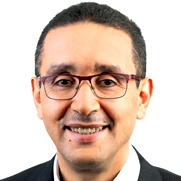
Keynote Speaker - Houari Sahraoui:
"How Can AI Capture Domain Knowledge for Modeling, and Can We Trust It?"
Houari Sahraoui is a Professor in the GEODES Software Engineering Lab within the Department of Computer Science and Operations Research at the Université de Montréal. He also serves as Vice-Dean of the Faculty of Arts and Sciences. He received his Ph.D. in Computer Science from Pierre and Marie Curie University (LIP6) in 1995, specializing in Artificial Intelligence.
His research focuses on AI for Software Engineering, including software automation, model-driven engineering, digital twins, and generative AI for code and modeling tasks. He has published more than 200 papers in leading venues and has received multiple Best Paper Awards, ACM SIGSOFT Distinguished Paper Awards, and the IEEE TCSE 10-Year Most Influential Paper Award.
He has held several leadership roles in the software engineering community, serving as General Chair of ASE, MODELS, and VISSOFT, Program Chair of MODELS and VISSOFT, and Program Committee member for numerous leading IEEE and ACM conferences. He has also served as Associate Editor for several journals, including Springer Software and Systems Modeling, and is a founding member of CS-Can | Info-Can, the Canadian computer science society. He is a Fellow of Automated Software Engineering and the recipient of the CS-Can | Info-Can Lifetime Achievement Award in Computer Science.
Overview of Workshop Format
The format of the workshop reflects the goals of the workshop: constructive feedback for accepted workshop papers, collaboration, and community building. The workshop will be highly interactive with a few paper presentations, a keynote presentation currently planned for the pre-lunch session, and plenary brainstorming and general discussion sessions. The discussion topics are chosen based on the specific interests of the participants. The short presentations and the results of the brainstorming and discussion sessions are posted on the workshop website after the workshop.
A group dinner in the evening of the workshop day offers further opportunities of community building and discussions.