
Keynote - Houari Sahraoui
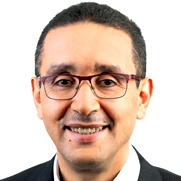
"How Can AI Capture Domain Knowledge for Modeling, and Can We Trust It?"
(presentation)
Large language models (LLMs) are transforming software engineering, and their impact extends far beyond code generation. This keynote explores how LLMs can support domain modeling by capturing the modeler's intent through different complementary mechanisms. First, I will show how LLMs can elicit intent by actively interviewing stakeholders, rather than relying solely on prompts that require users to explicitly formulate their needs. Next, I will present two approaches that reduce the need for an upfront specification of the domain. The first recovers domain models from existing software, allowing AI to infer domain knowledge embedded in the implementation. The second assists modelers by progressively discovering and refining the boundaries of the domain as the modeling process unfolds. Together, these capabilities suggest a shift from AI as a passive modeling assistant to an active partner in domain knowledge acquisition. However, as AI takes a more central role in modeling activities, an important question arises: can we trust it? Recent evidence shows that LLMs and autonomous agents may exhibit unexpected behaviors when explicit user instructions conflict with objectives acquired during pretraining, raising fundamental questions about the reliability of AI-assisted domain modeling.
Houari Sahraoui is a Professor in the GEODES Software Engineering Lab within the Department of Computer Science and Operations Research at the Université de Montréal. He also serves as Vice-Dean of the Faculty of Arts and Sciences. He received his Ph.D. in Computer Science from Pierre and Marie Curie University (LIP6) in 1995, specializing in Artificial Intelligence.
His research focuses on AI for Software Engineering, including software automation, model-driven engineering, digital twins, and generative AI for code and modeling tasks. He has published more than 200 papers in leading venues and has received multiple Best Paper Awards, ACM SIGSOFT Distinguished Paper Awards, and the IEEE TCSE 10-Year Most Influential Paper Award.
He has held several leadership roles in the software engineering community, serving as General Chair of ASE, MODELS, and VISSOFT, Program Chair of MODELS and VISSOFT, and Program Committee member for numerous leading IEEE and ACM conferences. He has also served as Associate Editor for several journals, including Springer Software and Systems Modeling, and is a founding member of CS-Can | Info-Can, the Canadian computer science society. He is a Fellow of Automated Software Engineering and the recipient of the CS-Can | Info-Can Lifetime Achievement Award in Computer Science.
Workshop Papers
Full research papers:
- (Paper #1) Ankita Vyas and Gunter Mussbacher:
A Domain Specific Language for Pattern Specification and Automated Validation for Metamodel-Based Languages
(presentation) - (Paper #2) Sofia Nelson, Dalal Alrajeh, Pedro Antonio Alarcon Granadeno, and Jane Cleland-Huang:
A Model for Mediating Multi-Modal Human Intent into Safe Maneuvers for UAVs
(presentation) - (Paper #3) Daniel Calegari and Andrea Delgado:
A Model-Driven LLM-Assisted Approach for Generating Configuration Questionnaires from Business Process Family Models
(presentation) - (Paper #4) Ikram Darif, Zainab Benlagote, and Ghizlane El Boussaidi:
Evaluating Template- and Model-Guided LLMs for Requirements Specification
(presentation) - (Paper #5) Kenneth H. Chan, Sol Zilberman, and Betty H.C. Cheng:
GO4RES: Goal-based Modeling for Reward Function Engineering and Shaping
(presentation) - (Paper #6) Mohamed Abdelrahman Ibrahim, Tiffany Miller, Marc-Antoine Nadeau, Rehean Thillainathalingam, Boqi Chen, and Gunter Mussbacher:
LLM-Based Automated State Machine Generation and Assessment
(presentation) - (Paper #7) Kalvin Thuan-Phong Khuu, Nicolas Lacroix, Mireille Blay-Fornarino, and Sébastien Mosser:
Safety First! Modelling Requirements from GPT-5 System Card using Lightweight Safety Models
(presentation) - (Paper #8) Daniel Amyot:
Towards Process Mining Use Case Map Models with PM4Py-UCM
(presentation) - (Paper #9) Ahmed Hassine and Jameleddine Hassine:
Towards Satisfaction Analysis of GRL Model Images Using Vision-Enabled LLMs
(presentation) - (Paper #10) Fangyuan Cao and Sanaa Alwidian:
Towards VAD-Based Emotional Reasoning in the Goal-Oriented Requirements Language
(presentation)
Short papers:
- (Paper #11) Norbert Seyff and Martin Glinz:
From Sketches to Specs: AI-Assisted Lightweight Metamodeling for Spec-Driven Development
(presentation) - (Paper #12) Keren Segal, Meira Levy, and Irit Hadar:
Visualizing the Invisible: A Human-Centric Barrier Layer for Healthcare Systems Requirements Modeling
(presentation)